Showing posts with label Living organisms. Show all posts

Monday, May 30, 2016

2.22 Describe experiments to investigate photosynthesis, showing the evolution of oxygen from a water plant, the production of starch and the requirements of light, carbon dioxide and chlorophyll

Pond weed experiment
  • Pond weed in large beaker with water
  • Count bubbles released in 1 minute
  • Record results and repeat 3x
  • Repeat, changing either temperature, concentration of CO2, light intensity and / or plant species
Image of apparatus

Monday, May 23, 2016

To Learn: Plants

List of things that should take priority in revision:


  • Transpiration is important to plants because it allows a steady stream of water to happen - when water moves out through transpiration, more water can be pulled in through the roots. This is possible because water is cohesive (molecules of water are attracted to each other). If you put little blobs of water on a desk that is slippery enough and they are close, the two little blobs will form one bigger blob.
  • In intense light, guard cells become turgid, which causes the stomata to open, so rate of transpiration increases
  • When the stomata is open, carbon dioxide, oxygen and water vapour can diffuse in (so photosynthesis can occur) and excess water vapour can diffuse out
  • Using this apparatus, rate of water loss can be measured, because the bubble moves up with the intake of water. The faster the intake, the faster the rate of transpiration.
  • To investigate the effect of wind speed, temp, etc. on the experiment above, just modify the environment; i.e. for wind, add a hairdryer, etc.


Sunday, April 3, 2016

2.89 Describe the role of the skin in temperature regulation, with reference to sweating, vasoconstriction and vasodilation

Stimulus: body temperature
Receptor: hypothalamus (brain)
Effector: skin
Response: warming up / cooling down

It's important to keep our body temperature constant because most of our enzymes work best at about 37ÂșC. Keeping internal conditions within acceptable limits is known as homeostasis.

Too cold

  • Shivering: generates heat in the muscles + from increased respiration
  • Hairs stand on end: traps an insulating layer on the surface of your skin
  • Vasoconstriction: capillaries near the surface of the skin narrow so they carry less blood and more heat is kept in
  • Reduced sweating: because sweat cools you down and you don't want that!


Too hot
  • Vasodilatation: capillaries widened and pushed towards the surface of the skin by this so more heat is lost through radiation and conduction
  • Sweating: produced by sweat glands in your skin and it is heated by the body. When it evaporates, it takes the heat with it.
  • Hairs lie flat: less air is trapped


Saturday, April 2, 2016

2.79 Understand that a coordinated response requires a stimulus, a receptor and an effector

To carry out a response, 3 main things are needed:

  • A stimulus: A change in environment
  • A receptor: Something that detects the change 
  • An effector: To carry out a response
Example:
  • Stimulus: you touch a hot object
  • Receptor: nerves in your finger
  • Effector: muscles that pull your hand away from the potentially dangerous hot object

2.78 Understand that homeostasis is the maintenance of a constant internal environment and that body water content and body temperature are both examples of homeostasis

Homeostasis is the control of internal conditions basically. Examples of this include:

  • Osmoregulation: control of water
  • Thermoregulation: control of temperature
Thermoregulation is essential because (at least for humans), 37°C is about the optimum temperature for your body to function. Osmoregulation is also important so that the plasma in the blood isn't too dilute and isn't too concentrated (more on that in urinary system posts)

Here's a random GIF because why not

Monday, January 25, 2016

2.62 Understand that platelets are involved in blood clotting, which prevents blood loss and the entry of micro-organisms

BACKGROUND INFO
- when you cut yourself / are injured, you are at risk of losing blood
- platelets are fragments of cells
- platelets are produced in the bone marrow

EVERYTHING IS EXPLAINED :D
Platelets release chemicals when there is an open wound that turn fibrinogen into fibrin, which is a solid. This forms a mesh which traps red blood cells. It eventually dries over to form a scab, and underneath, the tissue begins to repair itself.

(life hack - if you want a wound to heal quickly, don't try to pull of the scab!!)
Figure 1: A lovely picture of trapped red blood cells under the mesh
of fibrin - view from a microscope :)


IN SUPER SIMPLE STEPS
P - Platelets release chemicals
FiFi - Fibrinogen turns to fibrin
M - Mesh is formed
T - Traps red blood cells
D - Dries over
S - Scab forms
R - Repair happens in tissue underneath scab

HOW TO REMEMBER THAT
Papa Fifi makes tiny dark snakes run

(whatever works for you, really)

OR 
Here's an embarrassing song which might actually help:
*to the tune of twinkle twinkle little star*

Platelets release chemicals
Fibrinogen turns to fibrin.
Mesh is formed,
Traps red blood cells
It dries over
Scabs are formed
Tissue begins to repair
*insert final line here*

Again, whatever works for you. I was just...having a musical moment. Great. Now I've put it out there for the internet to see. Oh well, if it works, it's worth it :)


2.61 Understand that vaccination results in the manufacture of memory cells, which enable future antibody production to the pathogen to occur sooner, faster and in greater quantity

Vaccination in 5 simple steps!


  1. Person is injected with a weak or harmless sample of the pathogen / disease^
  2. Body fights off the disease as usual**
  3. Lymphocytes split, forming memory cells
  4. Upon re-infection*, the body produces antibodies much quicker, sooner and in greater quantity^
  5. Body develops 'immunity'^
(the ones that have a ^ beside it, see below for exam tips.)

Exam tips :) :)
 1. I reccommend using the word "pathogen" 
2. THESE ARE KEY WORDS - VERY VERY IMPORTANT TO MENTION! (the bold bit in step 4)
3. I'm not sure it's a great idea to say your body is immune because sometimes the disease does come back, or something very similar.

Extra words just for show ;)
** (step 2) this is the primary immune response.
* (step 4) this is the secondary immune response.

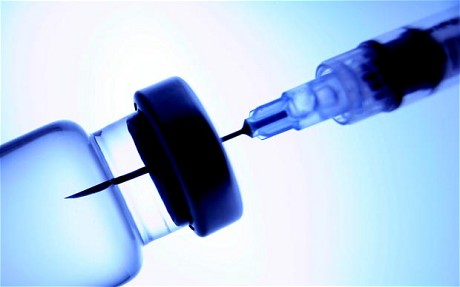
Figure 1 : Tee hee, hope you're okay with needles! :P


Friday, January 22, 2016

2.58 Understand the role of plasma in the transport of carbon dioxide, digested food, urea, hormones and heat energy

Plasma is made up of mostly water and is pale yellow in color (though I'm pretty sure you don't need to know that). This is a solvent, so things dissolve into the plasma, which is how they are carried around This transports carbon dioxide,  digested food, urea (basically urine...lovely), hormones and heat. 

Digested foods = soluble sugars and amino acids :)

Heat is important to regulate body temperature.

Figure 1 (below) shows a sample of plasma and blood - the plasma is the (rather gross-looking) yellow stuff above the red.
Figure 1


2.57 Describe the composition of the blood: red blood cells, white blood cells, platelets and plasma


  • 55% of the blood is plasma
  • More red blood cells than white blood cells
  • Platelets
Platelets are fragments of dead cells.
White blood cells can be lymphocytes or phagocytes.

I don't know if this is technically needed in this specification point, but I'll include it anyway because...well...it's good to know. :)
\/
Phagocytes are the white blood cells that swallow up the pathogen (which can be a bacterium, virus or protoctist). As can be seen below in figure 1, the cytoplasm forms little 'feelers' called pseudopodia. These surround the pathogen and form a vacuole. Then, digestive enzymes are released into the vacuole which digest and kill the pathogen.

Lymphocytes release antibodies which are complimentary to the antigens on the surface of a pathogen - that is how they (pathogens) are identified. Lymphocytes can cause the pathogens to stick together, leave a clearer chemical trail (so the phagocytes can follow them more easily) or explode.

Erythrocytes, aka red blood cells, have a bioconcave shape, no nucleus and have lots of haemoglobin. This allows them to carry oxygen around the body.

Plasma is used to transport stuff (see next posts(s))
Figure 1

Thursday, November 19, 2015

Questions 1 - Living Organisms

Past Paper Questions

Note that some may have been reworded to fit this blog format

1.a) A student was asked to write a list of the characteristics shared by all living organisms. The list is shown below, but it is not complete. Complete the list by writing down the missing characteristics. (2 marks)
  • Growth
  • Excretion
  • Movement
  • Respiration
  • Sensitivity
  • ____________
  • _____________
Answer: A simple way to do this would be to spell out Mrs Gren(c):
M - Movement, done!
R - Respiration, done!
S - Sensitivity, done!
G - Growth, done!
R - Reproduction, not done
E - Excretion, done!
N - Nutrition, not done
C - Control of internal conditions, not done but probably isn't included in this list anyway.

So you would complete the list by adding reproduction and nutrition! :)

b) Suggest why excretion is important to living organisms. (2 marks)
Answer : Waste produced from biological reactions can be toxic, and excretion is the removal of these products. This is necessary so the organism is not poisoned by its own toxic waste!

2. a) Living organisms can be put into major groups based on common features that they share. The table below shows some of the main groups of organisms, their features and examples of each. Complete the table to show the correct groups, two features of each group and an example of an organism in each group. (5 marks)
Answer: For an example of animals, you could literally write any animal you know. I'm going to say "mammoth" because I feel like it now, but I feel like it's better to talk about an animal that ISN'T extinct, so in an exam, I'd write something like "elephant". Features of bacteria include the fact that they are unicellular (are only made up of 1 cell) and do not contain a nucleus, only a chromosome of DNA. An example of a bacterium is pneumoccus, which is responsible for causing pneumonia. The third group is a virus. This can be seen from the fact that it is always parasitic and only reproduces inside living cells.

b) Organisms that cause disease are known as pathogens. Give two groups of organisms that include pathogens. (2 marks)
Answer: The safest things you can write are bacteria and viruses. Viruses are nearly always pathogenic and some bacteria are. I guess you could also write "protoctists" but that might be a little risky, though some are in fact pathogenic (like plasmodium).


Monday, October 26, 2015

2.37 Describe experiments to investigate the evolution of carbon dioxide and heat from respiring seeds or other suitable living organisms

Experiment would be set up as follows to investigate release of carbon dioxide:

  • Put x grams of germinating seeds in a test tube.
  • Cover it with a bung/cork with a tube through it
  • Have one end of the tube in limewater
  • If it turns cloudy, carbon dioxide has been given off
  • See figure 1
Figure 1: Apparatus
To investigate the release of heat:

  • Put seeds in a test tube
  • Seal it with a cotton puff
  • Place a thermometer in it
  • Place the setup in a cold room (no less than 15ÂșC)
  • Measure initial temperature
  • Measure temperature after x amount of time (eg 20 mins)
  • Have another test tube, in the same room, with the same amount but have the seeds boiled. Leave it for the same amount of time.
  • Compare test tube 1 and 2. :)

Figure 2: Apparatus
Note that all images used in this post were created by me.

2.45 Understand the role of the intercostal muscles and the diaphragm in ventilation

Intercostal Muscles
As you breathe in...

  • The muscles contract
  • The ribs move up and outward
As you breathe out...
  • The muscles relax
  • Ribs move in and down
Diaphragm
As you breathe in...
  • The diaphragm contracts, moving down
  • Low pressure is created inside the lungs,  forcing air in
  • Diaphragm pulls down
As you breathe out...
  • The diaphragm relaxes 
  • Pushes upwards
  • High pressure is created inside the lungs, forcing air out
Source: BBC BitesizeFigure 1: A diagram of the respiratory system


2.44 Describe the structure of the thorax, including the ribs, intercostal muscles, diaphragm, trachea, bronchi, bronchioles, alveoli and pleural membranes

How air travels...
Mouth/nose→Trachea→Bronchi→Bronchioles→Alveoli→Gas exchange occurs and then the process happens in reverse (i.e. from alveoli to bronchioles)

The functions of each of these parts:

Ribs - These are curved bones that embrace and protect the lungs from damage. They are linked together by intercostal muscles.

Intercostal muscles - Located between the ribs and expand and contract as the lungs fill or deflate. They keep the ribs in place too.

Trachea - Lined with C shaped (or U shaped, depends how you think of it) rings of cartilage, these protect it from being crushed. This is the pipe that air travels down from the mouth or nose.

Bronchi - The two tube like structures that divide the trachea, one leading into each lung. 

Bronchioles - Smaller tube like structures that contain alveoli at the tips and lead the air in and out of them

Alveoli - Tiny, grape-like air sacs surrounded by capillaries where gaseous exchange occurs

Pleural membranes - The outer lining of the lungs, which would feel kind of wet, and stops the lungs sticking to the ribs, as well as reducing friction. 

Figure 1: A diagram of the human thorax

2.40 Understand that respiration continues during the day and night, but that the net exchange of carbon dioxide and oxygen depends on the intensity of light

Figure 1: Plant during the day
Yes, plants photosynthesize, but they respire too. They respire throughout the day and the night, because, of course, it is a living organism. As you should know, glucose is used in respiration, which the plant produces through photosynthesis :)

During the night, a plant only respires, as there is no sunlight. This means that it gives off carbon dioxide and does not re-absorb it. Similarly, during the night, oxygen will not be given off, as the plant is not photosynthesizing.

Remember: photosynthesis depends on light, but respiration never stops ^_^

Figure 2: Plant at night


2.39 Understand gas exchange (of carbon dioxide and oxygen) in relation to respiration and photosynthesis

In both photosynthesis and respiration, gas exchange occurs: one gas is swapped for another. They are the opposite of each other, which is why it works.

photosynthesis ~ carbon dioxide + water → glucose + oxygen
The plant, or whatever is photosynthesizing, is using the waste products of respiration, taking in carbon dioxide and giving out oxygen as a waste product.

respiration ~ glucose + oxygen → carbon dioxide + water
The organism is using the products of photosynthesis (although glucose can be obtained through food, so I guess that doesn't really work..... you probably shouldn't put that in your exam...sozzies), taking in oxygen and giving out carbon dioxide.

Because why not, here is a diagram

2.38 Understand the role of diffusion in gas exchange

Diffusion is the random movement of particles from an area of high concentration to an area of low concentration. This is exactly what happens in gas exchange. 

It occurs in the alveoli, in the lungs, where oxygen is transferred into the bloodstream and carbon dioxide diffuses out of the blood and is exhaled. 


There is a high concentration of oxygen in the alveoli and a low concentration in the deoxygenated blood coming into the lungs. That is how diffusion occurs.

There is a high concentration of carbon dioxide in the blood coming into the lungs, which diffuses back into the alveolus and gets exhaled out of the body. 
↓↓↓
The gases move across the wall of the alveolus. 

Figure 1: A pulmonary alveolus


2.36 Write the word equation for anaerobic respiration in plants and in animals

In animals, it is:

glucose → lactic acid (+ energy)

In plants, it is:

glucose → ethanol + carbon dioxide (+ energy)

2.35 Write the word equation and the balanced chemical symbol equation for aerobic respiration in living organisms

Glucose + oxygen → carbon dioxide + water (+ energy)

C6H12O6 + 6O2    →    6CO2 + 6H2O (+ energy)

2.34 Describe the differences between aerobic and anaerobic respiration

Aerobic respiration is when an organism respires using oxygen and glucose is completely and fully broken down. This is used for movement, growth, etc. in humans. It is how we respire most of the time. This may be different in other organisms, or the same.

glucose + oxygen → carbon dioxide + water (+ energy)

Anerobic respiration is when an organism respires without using oxygen. Yeast, for example, naturally respires anerobically. In humans, however, we respire anerobically when the heart and lungs cannot work fast enough to provide enough oxygen around the body to break down that glucose. Instead, the body does not use oxygen, providing a fast, short burst of energy. This causes the build up of lactic acid (a waste product) in our muscles, which sometimes makes them sore. After respiring anerobically, as a human, you breathe heavily to make up for the oxygen lost. This can occur in other organisms too but may be different.

glucose → lactic acid (+ energy)


Figure 1: When you sprint, you respire anerobically. (Yes, that is Usain Bolt.)

2.33 Understand that the process of respiration releases energy in living organisms

All living things respire. (not to be confused with breathing) This occurs in the mitochondria of every cell, and produces energy for the organism. Even plants do this. It is the breaking down of glucose to produce energy.