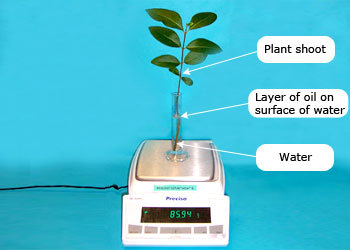
- Weigh the plant at the start
- Put it in a test tube with only its roots / end in the water
- Put a layer of oil over water
- Leave for x amount of time
- Weigh plant again
- Record results
- Repeat, changing one variable (i.e temperature)
Showing posts with label Transport. Show all posts
Tuesday, May 31, 2016
2.56 Describe experiments to investigate the role of environmental factors in determining the rate of transpiration from a leafy shoot
2.55 Explain how the rate of transpiration is affected by changes in humidity, wind speed, temperature and light intensity
Humidity
Decreases amount of transpiration because the concentration of H₂O in the air will equal that of the plant, so it can't move from high to low concentration as per usual
Wind
Increases transpiration because water is blown away, which means there is a greater difference in H₂O concentration
Temperature
Increases transpiration: the heat makes the water evaporate more quickly.
Light intensity
Stronger light means more transpiration because leaves absorb more heat from the light, so water evaporates quicker
2.54 understand that transpiration is the evaporation of water from the surface of a plant
Transpiration is when water evaporates from the surface of a plant; typically below the leaf because of the stomata being opened by guard cells
2.53 Explain how water is absorbed by root hair cells
- Water is absorbed by osmosis
- (Minerals absorbed by active transport)
- Hair cells are long in shape, giving it a large surface area (also, they branch)
- Epidermal cells increase surface area further
- Makes osmosis faster and more efficient
- Substances are transported by the xylem
2.67 Understand the origin of carbon dioxide and oxygen as waste products of metabolism and their loss from the stomata of a leaf
Both CO₂ and O₂ are waste products of metabolic reactions:
- CO₂ + H₂O > C₆H₁₂O₆ + O₂ (photosynthesis)
- C₆H₁₂O₆ + O₂> CO₂ + H₂O (respiration)
which are carried out by plants.
2.52 Describe the role of xylem in transporting water and mineral salts
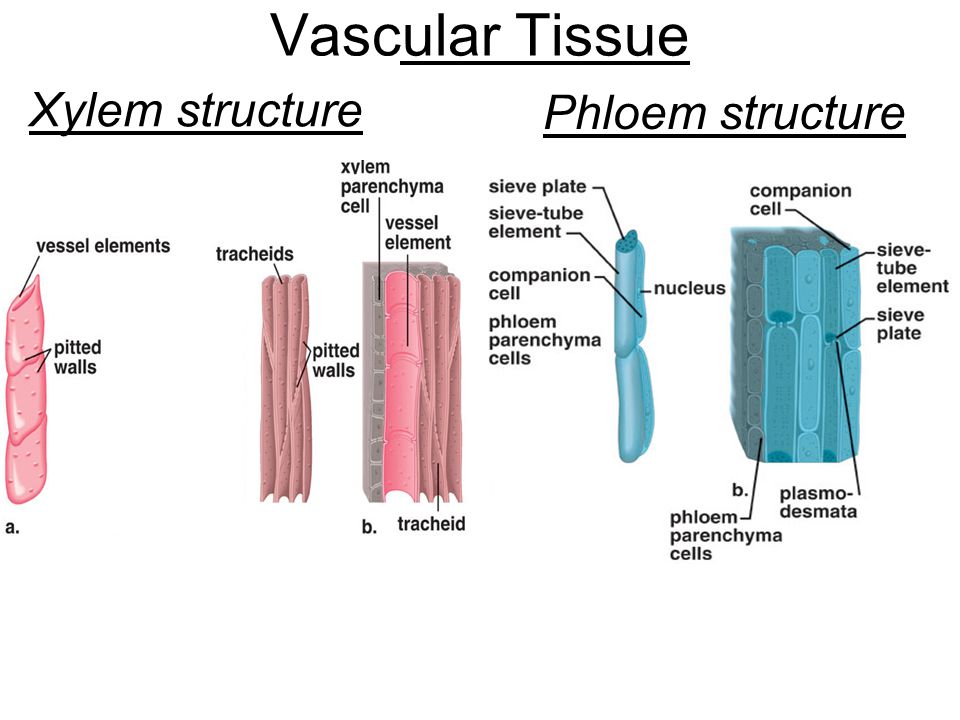
- Hollow, dead cells
- Transports water and mineral salts
- Side by side with phloem
- EG Nitrates, phosphates, etc.
2.51 Describe the role of phloem in transporting sucrose and amino acids between the leaves and other parts of the plant
- Phloem has living cells in form of a column
- Has companion cells and a cytoplasm + cellulose cell wall
- Companion cells very metabolically active
- Carries dissolved substances such as sucrose and amino acids within the plant
2.50 Understand the need for a transport system in multicellular organisms
Multicellular organisms have a small surface area to volume ratio so diffusion is insufficient and would be too slow anyway. Transport systems speed up the process of getting the molecules required (i.e circulatory)
2.49 Understand why simple, unicellular organisms can rely on diffusion for movement of substances in and out of the cell
They have a very high surface area to volume ratio, so things diffuse in and out very quickly. Also, they are so small they don't use up that much in terms of energy, food, etc. so diffusion is sufficient.
Subscribe to:
Posts (Atom)