Showing posts with label Biological molecules. Show all posts

Monday, October 26, 2015

2.11 Describe experiments to investigate how enzyme activity can be affected by changes in temperature.

As you should know, the test for starch is to put iodine on a sample, and it will turn blue black if starch is present (or it may turn another color but the exam answer is blue black). To investigate how temperature affects the enzyme rate of reaction, you could do the following experiment:


  • Put x amount of starch in a test tube (eg 10 cm3) 
  • Add amylase to it
  • Put the mixture into a waterbath at temperature y
  • On tiles with little dimples (WHAT IS THAT CALLED?!), use a dropper/pipette to put a small sample of the mix (of what is in the test tube) onto one of the 'dimples' and add iodine to it. Do this every thirty seconds.
  • Time how long it takes for the samples to stop turning blue black
  • Repeat everything again, but at at different temperature. An example would be do do the experiment at 15ºC, 25ºC, 35ºC, 45ºC and 55ºC (in other words, you change temperature y)
  • Plot a graph
Figure 1: What your graph would look like (something similar)

2.10 understand how the functioning of enzymes can be affected by changes in active site caused by changes in pH

If the pH is too far from the ideal, optimum pH, the enzymes can de-nature, as a change in pH can cause the bonds that hold the structure in place to break :( This would mean that the substrate no longer fits in the active site. 

Different enzymes will work at different pH values. Eg the enzymes in your stomach will work best at a more acidic pH than those in your small intestine.

Figure 1: A graph showing the relationship between rate of enzyme activity
and pH

2.32 Describe an experiment to investigate the energy content in a food sample

Figure 1: Apparatus (but is missing the thermometer in the boiling tube)
  • Get 5 different food samples. For this experiment, let’s say crackers, apple, cornflakes, dried tomato and tofu. (We don't want to be killing animals...no thanks!)
  • Prepare the following apparatus: A utility clamp holding a boiling tube with a thermometer in it. Have a skewer and a bunsen burner at the side.
  • With each food sample, put it on the skewer and take the SAME amount and set fire to it. Place it directly underneath the boiling tube filled with water. Record how much the temperature has risen.
  • Empty the tube and take the SAME amount of water as before at the SAME (room) temperature. 
  • Repeat steps 3 and 4 for all the food samples. Now calculate the difference in temperature.
  • The more the temperature rose, the more energy the food sample has. :) To plot a graph, plot a bar graph with the x axis labelled with the types of food you used and the y axis labelled with percentage % change in temperature (yay…more calculation…)


2.29 Understand the role of digestive enzymes, to include the digestion of starch to glucose by amylase and maltase, the digestion of proteins to amino acids by proteases and the digestion of lipids to fatty acids and glycerol by lipases.

Enzymes, as mentioned before, are biological catalysts. They help break down the food that moves through our digestive system. Different enzymes do different tasks, and break down very specific components of food:

amylase and maltase break down starch into glucose

protease breaks down proteins into amino acids

lipase breaks down lipids into fatty acids and glycerol 

Figure 1: The structure of lipids

2.24 Identify sources and describe functions of carbohydrate, protein, lipid (fats and oils), vitamins A, C and D, and the mineral ions calcium and iron, water and dietary fibre as components of the diet

Carbohydrates 
Sources of simple carbs: Candy, fruit, etc.
Sources of complex carbs: Bread, pasta, beans, etc.

Carbs are the body’s main source of energy. Used as immediate energy.

Proteins
Sources: Beans, lentils, soy, etc. (I’m a vegetarian so I prefer to list that kind of stuff, but if not, protein can also be found in animal meat, including fish)

Protein is used to build and repair tissue and build muscle.

Lipids
Sources: oil (eg olive oil), fish, eggs, pork

Lipids are usually stored as fat for insulation and used as a long term energy store, as well as to protect (especially vital) organs.

Vitamin A
Sources: Green and yellow veggies (eg lettuce) and fish liver oil (yucks!) and dairy such as milk or eggs

Used to maintain eyes healthy, normal reproduction, formation and maintenance of teeth, skin and tissue. It is an antioxidant so it also helps the immune system function correctly.

Vitamin C
Sources: Oranges, lemons, raspberries, broccoli etc.

This is an antioxidant in the body and is essential in maintaining healthy connective tissue (deficiency causes scurvy) Also helps the absorption of iron and copper and helps fight and prevent infection.

Vitamin D
Sources: Sunlight, fish and liver oils. Few foods contain significant amounts.

Helps the body absorb calcium. (deficiency causes rickets)

Calcium
Sources: Milk, cheese, yoghurt and fortified soy milk, etc

Essential for maintaining strong bones, teeth and nails, functioning heart, muscles and nerves.
Iron
Sources: whole meat cereal, chickpeas, lentils, sunflower seeds, kale.

Used in haemoglobin in red blood cells, responsible for transporting oxygen around your body

Water
Sources: WATER!! (and soup lol)

Used in respiration.

Dietary fiber
Sources: Cereals, beans (eg chickpeas, red kidney beans, etc) and nuts


Important for healthy bowel function and reduces the risk of developing bowel cancer.

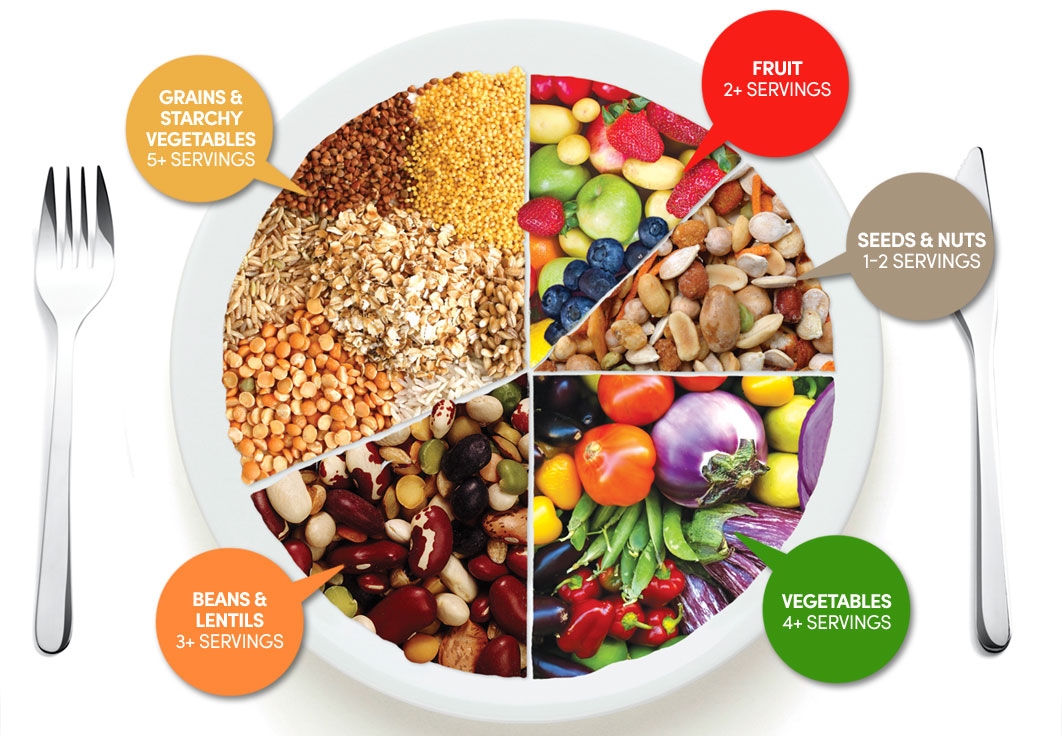
Figure 1: Vegetarian food plate, because why not
(yes, I am vegetarian...#sorrynotsorry)

2.23 Understand that a balanced diet should include appropriate proportions of carbohydrate, protein, lipid, vitamins, minerals, water and dietary fibre

A balanced diet should include correct proportions of carbs, proteins, lipids, vitamins, minerals and dietary fiber. This can be represented visually in the food pyramid. 

Figure 1: Food pyramid


For example, if a diet is too high in lipids and simple carbs (sugars), it is likely that the person will gain weight in an unhealthy way and experience health problems, such as clogged arteries due to excess cholesterol.

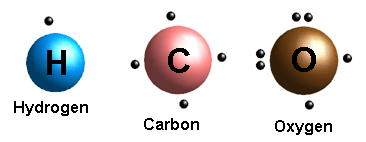
2.5 Identify the chemical elements present in carbohydrates, proteins and lipids (fats and oils)

Carbohydrates - made up of carbon, hydrogen, oxygen
Proteins - made up of nitrogen, carbon, hydrogen, oxygen, sulphur, phosphorus 
Lipids - made up of carbon, hydrogen, oxygen

Figure 1: The 3 main elements present in all.

2.6 Describe the structure of carbohydrates, proteins and lipids as large molecules made up from smaller basic units

(I cut out a bit of the spec. point again, sozzles. But I'm going to repeat it anyway.)

The structure of carbs, proteins and lipids are large molecules:

  • Proteins are made up of amino acids
  • Starch and glycogen are made up of simple sugar
  • Lipids are made of fatty acids and glycerol
Figure 1

2.7 Describe the tests for glucose and starch

Glucose
Put a few drops of benedict's solution in a test tube of the substance that you want to test for glucose and place it in a warm waterbath. Leave it for a few minutes. It will be blue, initially. If there is any change in colour, glucose is present.

Figure 1: Test for sugar scale
Starch
Put a drop of iodine solution on whatever you wan to test for starch (let's say, a cornflake). If there's a change in colour, starch is present.

Figure 2: The test for starch, using a potato as an example


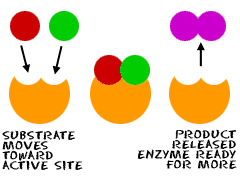
2.8 Understand the role of enzymes as biological catalysts in metabolic reactions

Enzymes are biological catalysts for metabolic reactions. This means that they speed up the chemical reactions needed to maintain life. 

Eg digestive enzymes speed up the breaking down of food

Figure 1

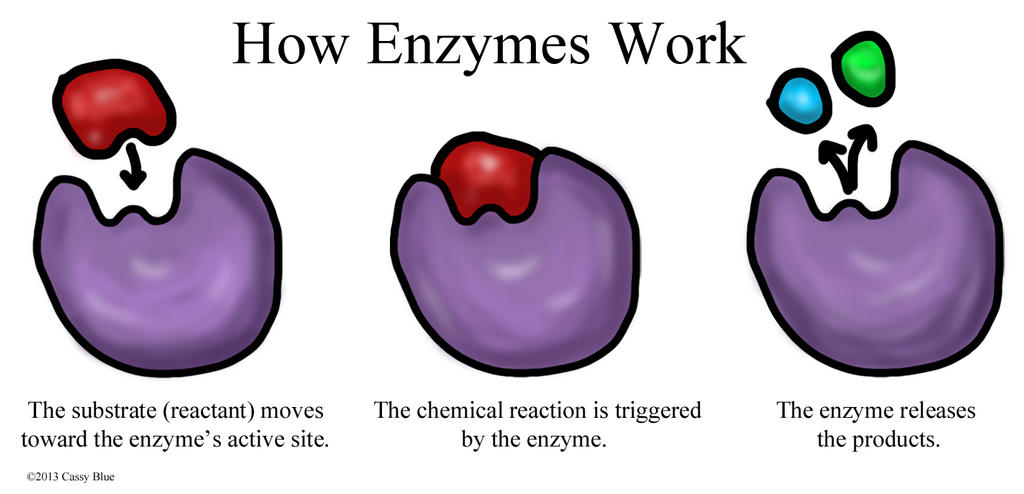
2.9 Understand how the functioning of enzymes can be affected by changes in temperature, including changes due to change in active site

Enzymes work best at an optimum temperature. This can be different from organism to organism, but in humans, it is about 36 - 38 ºC. 

If the temperature is too low, the enzymes won't have enough energy to speed up the reaction(s) much.

If the temperature is too high, the enzymes begin to denature, meaning that their protein structures change. The shape of the active site changes and they can no longer collide with the right substrate, as it doesn't fit in the active site.

Figure 1