Monday, October 26, 2015

2.27 Understand the processes of ingestion, digestion, absorption, assimilation and egestion

Ingestion: the act of taking food into the body; eating

Digestion: the process by which food is broken down and nutrients are absorbed into the bloodstream. Large, insoluble molecules are broken down into smaller, soluble ones.

Absorption: the process by which the soluble molecules are taken from the gut (typically in the small intestine) and transported into the bloodstream for use in the body.

Assimilation: the act of absorbing molecules through the cells in tissues


Egestion: To get rid of as a waste product (undigested food. Not to be confused with excretion)

Figure 1: Part of the digestive system

2.26 Describe the structures of the human alimentary canal and describe the functions of the mouth, oesophagus, stomach, small intestine, large intestine and pancreas

I hope you like reading :)

Food goes from… the mouth → oesophagus (gullet) → stomach → small intestine → large intestine → anything that is not digested goes out the body through the anus

The mouth mechanically breaks up the food into physically smaller bits. This is then moved down the oesophagus through a movement known as peristalsis. From there, it goes through the stomach. The sphincter between the end of the oesophagus and the stomach opens as the food goes through. The (very strong) acid in the stomach further breaks down the food chemically. From there, it goes into the duodenum where pancreatic juices (from the pancreas) are added to the food and digestive enzymes are also secreted by the pancreas, which speed up the breaking down of the food. Bile is added to neutralise the “mixture”, as it was highly acidic after leaving the stomach. The nutrients from the food are absorbed in the small intestine thanks to the hundreds of thousands of villi that line the small intestine walls, whose large surface area helps the nutrients dissolve quickly into the blood stream. From here, any remaining food goes through the large intestine, where the water is absorbed. Any undigested substances are excreted.

Figure 1: Human digestive system

2.25 Understand that energy requirements vary with activity levels, age and pregnancy.


A bodybuilder is going to need a lot more energy (from proteins and carbs, and lipids) than a female 14 year old. A baby is going to need quite a bit of energy, as he/she is growing, but nowhere near as much as an adult. A pregnant woman is going to need a lot of energy, as she needs to supply enough chemical energy for herself and her baby.

Figure 5-1: Read the title. Also, sorry it's hard to read.

2.24 Identify sources and describe functions of carbohydrate, protein, lipid (fats and oils), vitamins A, C and D, and the mineral ions calcium and iron, water and dietary fibre as components of the diet

Carbohydrates 
Sources of simple carbs: Candy, fruit, etc.
Sources of complex carbs: Bread, pasta, beans, etc.

Carbs are the body’s main source of energy. Used as immediate energy.

Proteins
Sources: Beans, lentils, soy, etc. (I’m a vegetarian so I prefer to list that kind of stuff, but if not, protein can also be found in animal meat, including fish)

Protein is used to build and repair tissue and build muscle.

Lipids
Sources: oil (eg olive oil), fish, eggs, pork

Lipids are usually stored as fat for insulation and used as a long term energy store, as well as to protect (especially vital) organs.

Vitamin A
Sources: Green and yellow veggies (eg lettuce) and fish liver oil (yucks!) and dairy such as milk or eggs

Used to maintain eyes healthy, normal reproduction, formation and maintenance of teeth, skin and tissue. It is an antioxidant so it also helps the immune system function correctly.

Vitamin C
Sources: Oranges, lemons, raspberries, broccoli etc.

This is an antioxidant in the body and is essential in maintaining healthy connective tissue (deficiency causes scurvy) Also helps the absorption of iron and copper and helps fight and prevent infection.

Vitamin D
Sources: Sunlight, fish and liver oils. Few foods contain significant amounts.

Helps the body absorb calcium. (deficiency causes rickets)

Calcium
Sources: Milk, cheese, yoghurt and fortified soy milk, etc

Essential for maintaining strong bones, teeth and nails, functioning heart, muscles and nerves.
Iron
Sources: whole meat cereal, chickpeas, lentils, sunflower seeds, kale.

Used in haemoglobin in red blood cells, responsible for transporting oxygen around your body

Water
Sources: WATER!! (and soup lol)

Used in respiration.

Dietary fiber
Sources: Cereals, beans (eg chickpeas, red kidney beans, etc) and nuts


Important for healthy bowel function and reduces the risk of developing bowel cancer.

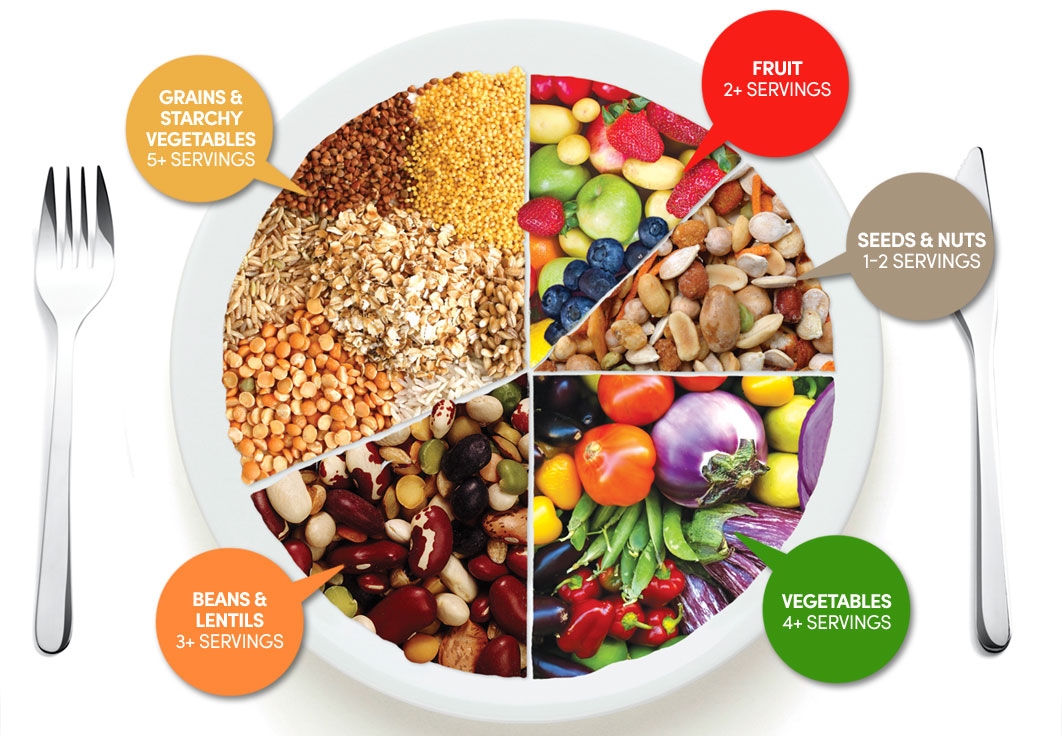
Figure 1: Vegetarian food plate, because why not
(yes, I am vegetarian...#sorrynotsorry)

2.23 Understand that a balanced diet should include appropriate proportions of carbohydrate, protein, lipid, vitamins, minerals, water and dietary fibre

A balanced diet should include correct proportions of carbs, proteins, lipids, vitamins, minerals and dietary fiber. This can be represented visually in the food pyramid. 

Figure 1: Food pyramid


For example, if a diet is too high in lipids and simple carbs (sugars), it is likely that the person will gain weight in an unhealthy way and experience health problems, such as clogged arteries due to excess cholesterol.

2.20 Describe the structure of the leaf and explain how it is adapted for photosynthesis

Figure 1: Labelled leaf diagram

  • Large surface area means more sunlight is absorbed
  • Usually very thin, meaning diffusion of carbon dioxide into the leaf can happen quickly
  • The stomata open and close, letting carbon dioxide in.
  • The epidermis is very thin and completely transparent, so all the sunlight can get to the leaf
  • There is a waxy cuticle that prevents water from getting into the leaf and reduces water loss
  • The waxy cuticle is also transparent to allow sunlight through
  • Palisade mesophyll is packed with chlorophyll and close to the top of the leaf so it gets the most sunlight, making photosynthesis more effective
  • In the spongy mesophyll there is quite a lot of air space which allows carbon dioxide to diffuse into the cells.

2.19 Understand how varying carbon dioxide concentration, light intensity and temperature affect the rate of photosynthesis


Concentration of CO2 (carbon dioxide)
If there is a higher concentration of CO2, the plant will photosynthesise more until a point where the amount of CO2 outweighs the rest that is needed for this. For example, if you put a plant in a room with a high concentration of CO2, it would photosynthesise more, but if you continued to increase the concentration, it would need more sunlight, or water, etc. to be able to continue increasing the rate at which is photosynthesizes. If the concentration is too low, the rate will decrease.

Light intensity
If the light / sunlight is more intense, the rate of photosynthesis will also increase. However, if the light is too bright, it might burn the plant’s leaves or cause it to overheat, in which case its enzymes would denature and the rate would go down :( . If the light is too dim, the rate of photosynthesis will decrease as it will not have enough light energy to transfer into chemical energy.

Temperature

If the plant is at optimum temperature, its rate of photosynthesis will be the highest. This is because the enzymes, that are biological catalysts and therefore speed up the plant’s metabolic reactions, will be working at their best. If the temperature is too high, the plant could burn, or its enzymes will denature, bringing down the rate of photosynthesis. Until that point, the higher the temperature, the higher the rate, as it has more energy from the heat .

Figure 1